My adventures with Generative AI so far…
For the past month I have been poking my way through Midjourney to see a) what it’s about and b) how can generative AI help me as a designer or photographer?
I’ve had a cautious eye on generative work for the last few years since looking at areas of it when working on my Photography Masters. We covered some of it during our critical practice writing - I was especially interested in it regarding peoples ethics and approaches towards vulnerable people (as this is what I spent a large part of my MA looking at).
ChatCPT and generative writing
I’d previously dipped my toe in by using ChatGPT for course research and Grammarly for writing essays. ChatGPT was vaguely useful in that it can obviously trawl websites for things connected to the query, but doesn’t understand specifics of a question. For instance, it would happily churn out what are essentially listicles when I asked it something along the lines of ‘Name 20 photographers who look at communities and the names of their projects’. What came out was a list of photographers and their projects but it was very tightly siloed (mostly US photographers), none of projects mentioned were linked to (just the main websites) and in quite a few cases the projects didn’t exist at all - they seemed to be pulled from a soup of ideas without context. Although Grammarly isn’t quite the same, it does use AI to generate ideas for rewriting. The effect was similar: pulling something out of a vat of samey writing to create some more similar writing. In the end I just used it as a cue to lead me in a direction, never actually using the wording it came up with.
For a real treat, read to the end of the article to read A Visit To The Chip Shop in the style of Vilém Flusser (Czech-Brazilian philosopher and writer). This was a test to see what ChatGPT would come up with using critical writing essays and also to gently poke fun at one of my tutors. The results were fine(?): they’re vaguely academic sounding but the heart of Flusser’s writing isn’t there at all, it’s just the equivalent of someone who is trying to sound knowledgeable having skim read the first few paragraphs on Wikipedia (which we’ve all done).
Generative images with Midjourney
Prior to using Midjourney, the nearest thing I’ve used is the Generative Fill function in Photoshop. This has mainly had the sole use of extending backgrounds around a subject so I can crowbar an image into different ratio formats for putting an advert on a widescreen document or a vertical Instagram screen. It’s reasonably handy but always needs a bit of tweaking afterwards. The newer additions that use Adobe Firefly don’t seem to be the best out of all the generative ai tools - the results give it a distinct bottom of the group iStock flavour. Some of the stuff that it comes up with wouldn’t look out of place on shitty local paper websites adverts (“You won’t believe how this horse saved money on its over 50s pension plan”).
Midjourney seems to be much better than that (with some large caveats). Where it really excels is pastiches of subjects (see below) and anything with organic patterning. I suspect you can really refine what you want with all the extra variables you can add in via the prompt.
However I don’t think it will replace anything going into a design or photography production environment. Its particular restrictions mean that you’ll not be able to tweak tiny aspects or move the camera to a different viewpoint. It also lacks specificity out of the box: you can’t, for instance, say ‘make this celebrity do this thing in a place’ and hope for an excellent result. There’s no real refinement as such - it’s mostly useful for cues or pointing you in directions.
The thing this reminded me the most of is the (now ancient) DOS shareware program Fractint which would let you generate fractals and you’d iterate along some path until you kind of got what you wanted.

Where Midjourney really shines is organic things like these shells.
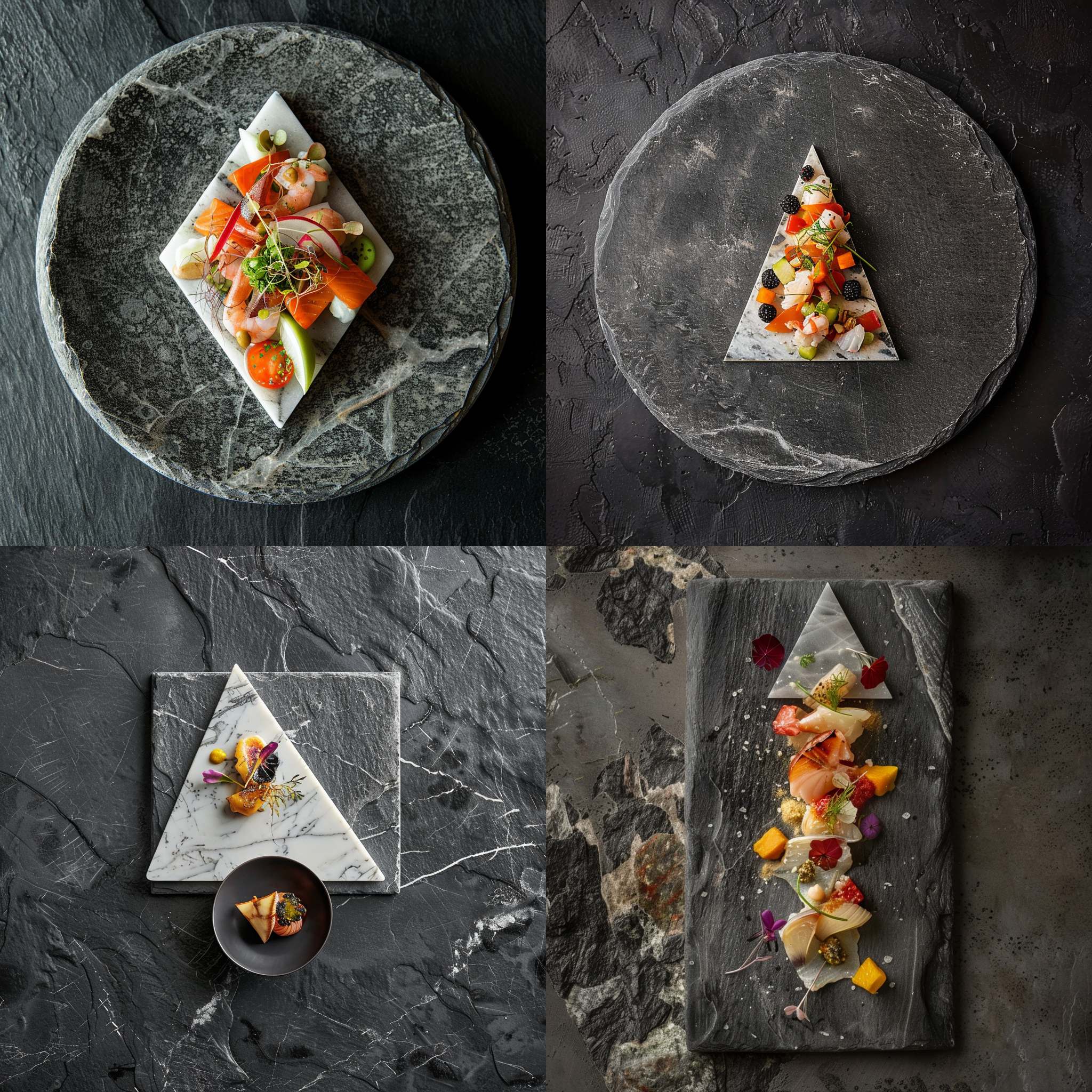
Generating ideas for seafood restaurant photography.

This was actually meant to be a photo, I don’t know why it defaulted to an illustration. It’s very nice though.

One of the few interesting divergences, this came off a prompt about magazine collages.
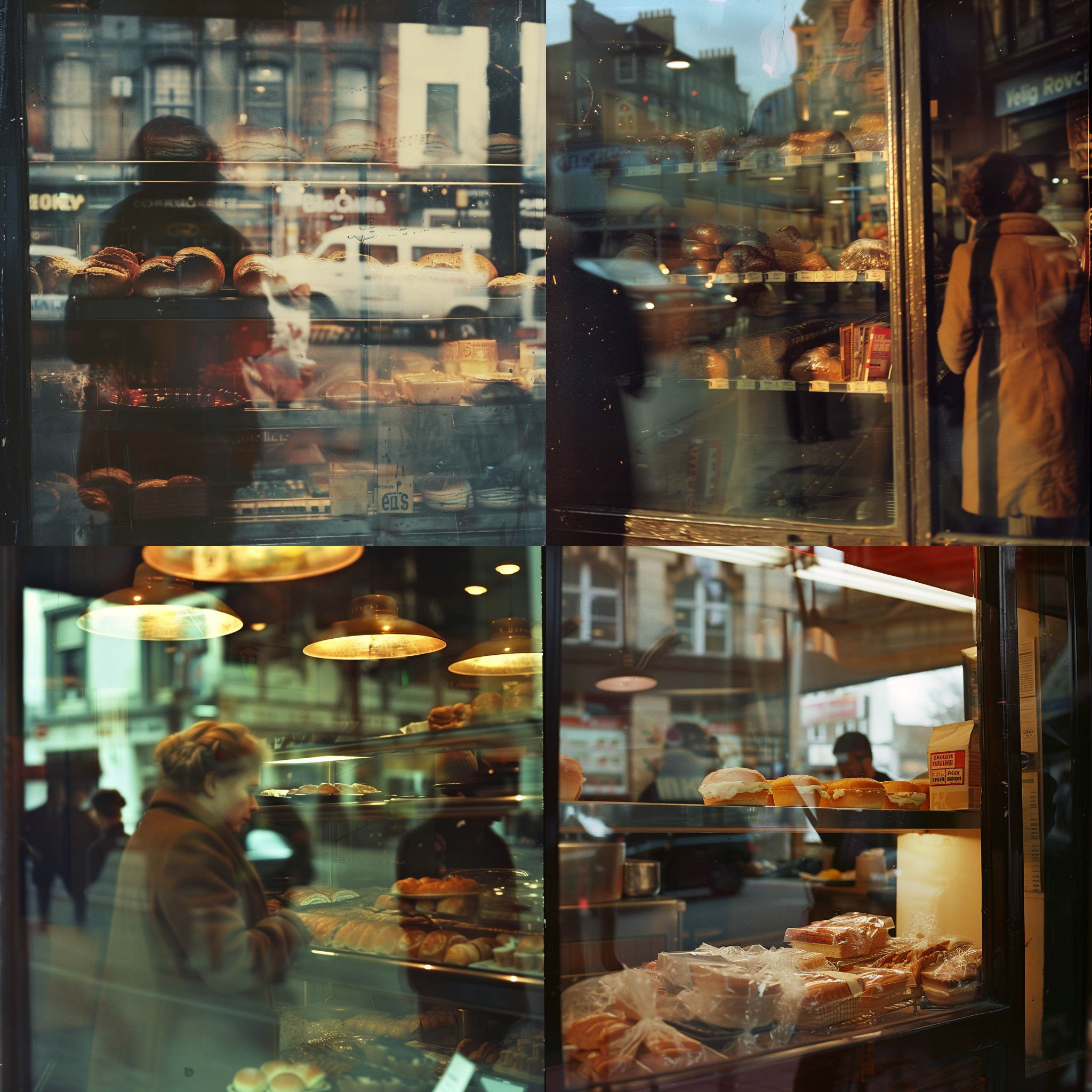
Greggs bakery by Saul Leiter.
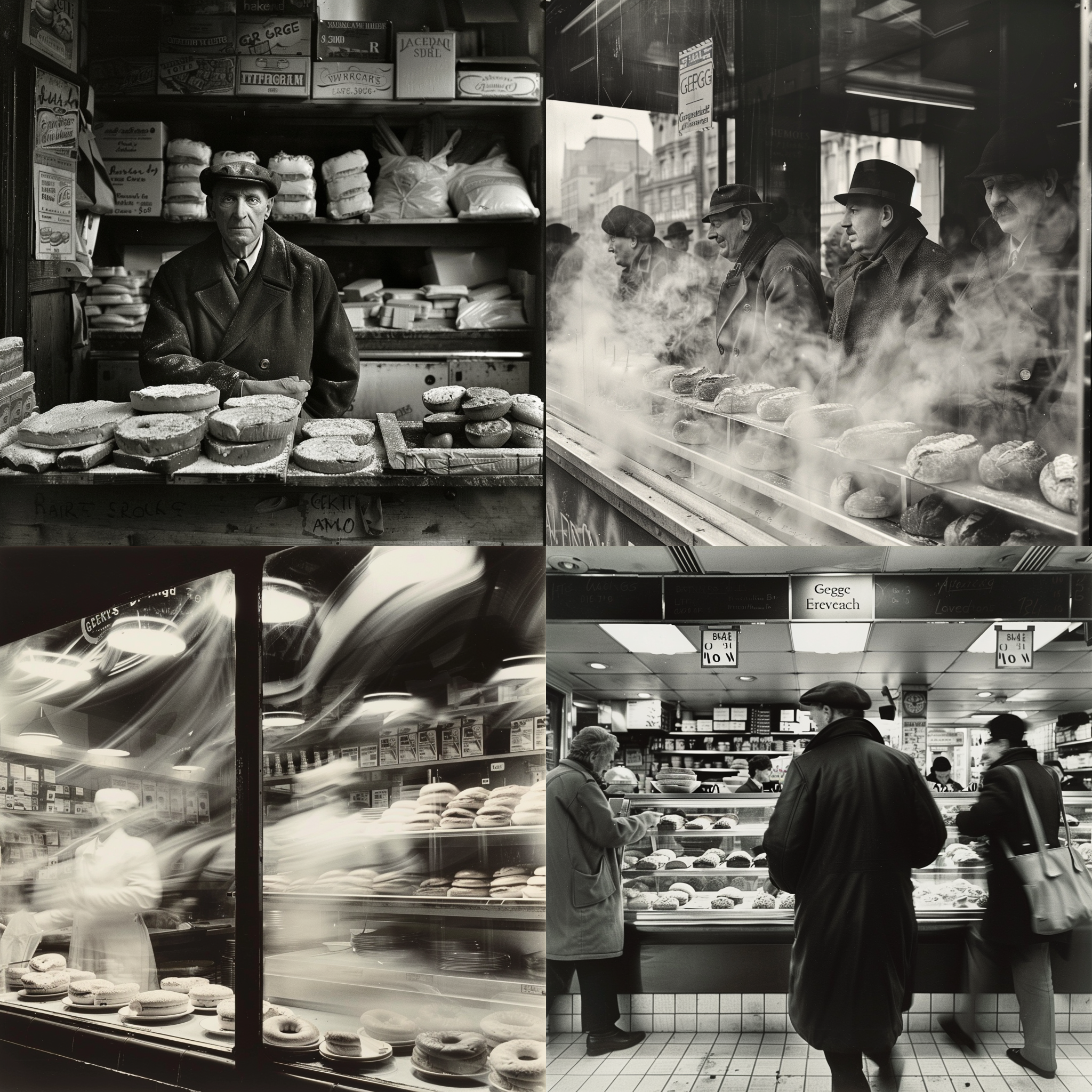
Greggs bakery by Richard Avedon. I doubt Midjourney knows about Greggs.
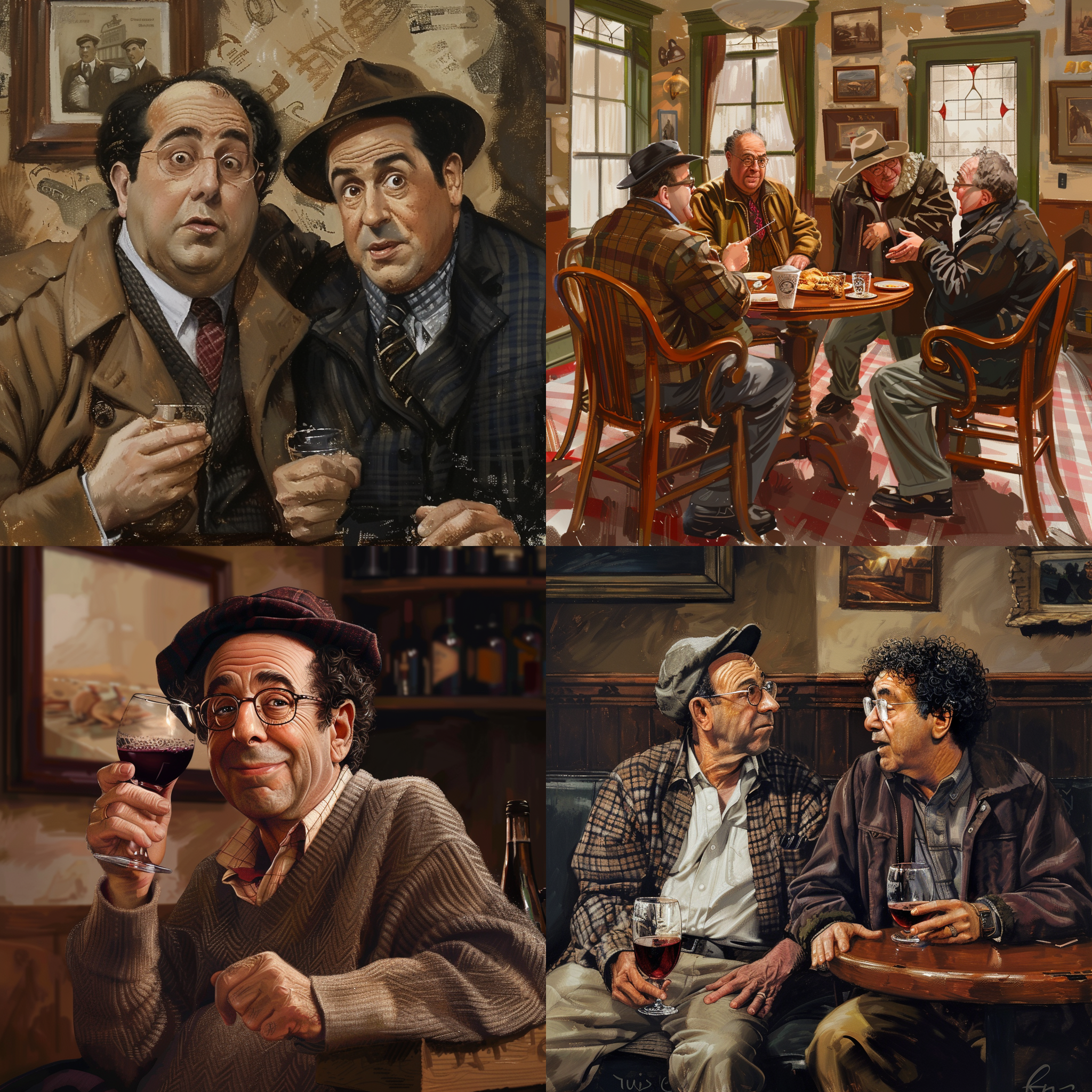
Seinfeld in the style of Last Of The Summer Wine (starring Danny Baker and Stanley Tucci top left)

Seinfeld Vs NCIS. I may have been getting bored by this point.
The results so far
To me, the net effect of all the generative prompts, AI design and image generators is something that lacks any context or understanding, it just looks at an enormous predictive pile and presents you with something saying “Will this do?”. It can look at a person and (mostly bar the odd extra finger) get the look right but not understand the bones or the muscles underneath and how they work. This might be expecting too much of it and instead I should be using it only to point me in a direction rather than get something more concrete.
I’m not going to dive in too seriously into Generative AI as I think ultimately it’s just another tool to supplement your design or photography work. It’s possible that you might get more out of a good Pinterest session (that’s fairly generative in a more limited way) than grinding away at refining a prompt. I will keep tapping away at it over the next few months and possibly do a new post on it by the end of the year.
Generative AI video
I’ve not looked at video yet but have a look at this horror show that are using it right: https://www.instagram.com/deadtempovisions/
References
Bobby Doherty does generated photographs very well
A.I. Is the Future of Photography. Does That Mean Photography Is Dead?
———-
Bonus Flusser funz
Prompt: Please write an essay in the style of Vilém Flusser about going to the chip shop.
As I approach the chip shop, a familiar sense of anticipation takes hold. The smell of fried potatoes wafts through the air, mingling with the aroma of hot oil and vinegar. My eyes are drawn to the neon sign in the window, advertising the delights within.
As I enter the shop, I am confronted with a flurry of sensory information. The bright lights, the sizzling of frying oil, and the murmur of conversation all combine to create a vibrant atmosphere. The chips themselves are a study in contrasts: golden brown on the outside, soft and fluffy on the inside. The crispy batter on the fish crackles in my mouth, giving way to succulent flakes of white flesh.
Yet beneath this seemingly simple transaction lies a deeper complexity. The chips themselves are the product of a highly technological process, involving the slicing and frying of potatoes, the careful regulation of heat and oil, and the precise timing required to achieve the perfect texture. The packaging in which they are served is itself the result of a long chain of production, involving the extraction and refinement of raw materials, the design and manufacture of machinery, and the logistics required to transport the finished product to its final destination.
And yet, despite this complexity, the experience of eating chips in a chip shop remains a fundamentally human one. It is a moment of shared pleasure, of communal enjoyment. We gather around the table, passing the salt and vinegar, swapping stories and jokes, and reveling in the simple pleasure of a well-cooked meal.
In this sense, the chip shop can be seen as a microcosm of modern society. It is a place where the fruits of technological progress are made manifest, yet where human connection and social interaction remain at the heart of the experience. It is a place where tradition and innovation coexist, where the past and the future are woven together in the fabric of everyday life.
And so, as I emerge from the chip shop, my stomach full and my spirits lifted, I am reminded of the complex interplay between technology and humanity, between progress and tradition. In this small corner of the world, I have tasted both the fruits of our collective labors and the simple pleasures of human connection. And in that, I find a sense of hope and optimism for the future, a belief that we can continue to harness the power of technology for the betterment of all, while never losing sight of the simple joys of life.